
There’s a quiet shift happening in how businesses think about payments—and it’s not about adding more options. It’s about choosing the right ones.
In 2026, businesses aren’t just asking, “Can we accept this payment?” They’re asking, “Is this the smartest way to get paid?”
That’s why conversations around certified checks, cashier’s checks, and eCheck payment are evolving. Not because these methods are new, but because the expectations around speed, efficiency, and control have completely changed.
And if you’re still treating all payment methods the same, you’re probably leaving money—and time—on the table.
Payments in 2026: It’s About Efficiency, Not Just Acceptance
The modern business environment doesn’t reward complexity. It rewards systems that are:
- Fast
- Predictable
- Cost-efficient
- Easy to manage at scale
Traditional instruments like certified checks and cashier’s checks still exist, but they’re now used selectively. Meanwhile, digital-first systems like eCheck payment solutions—backed by advanced eCheck payment processing services—are becoming the backbone of how businesses handle large and recurring transactions.
The shift isn’t dramatic. It’s practical.
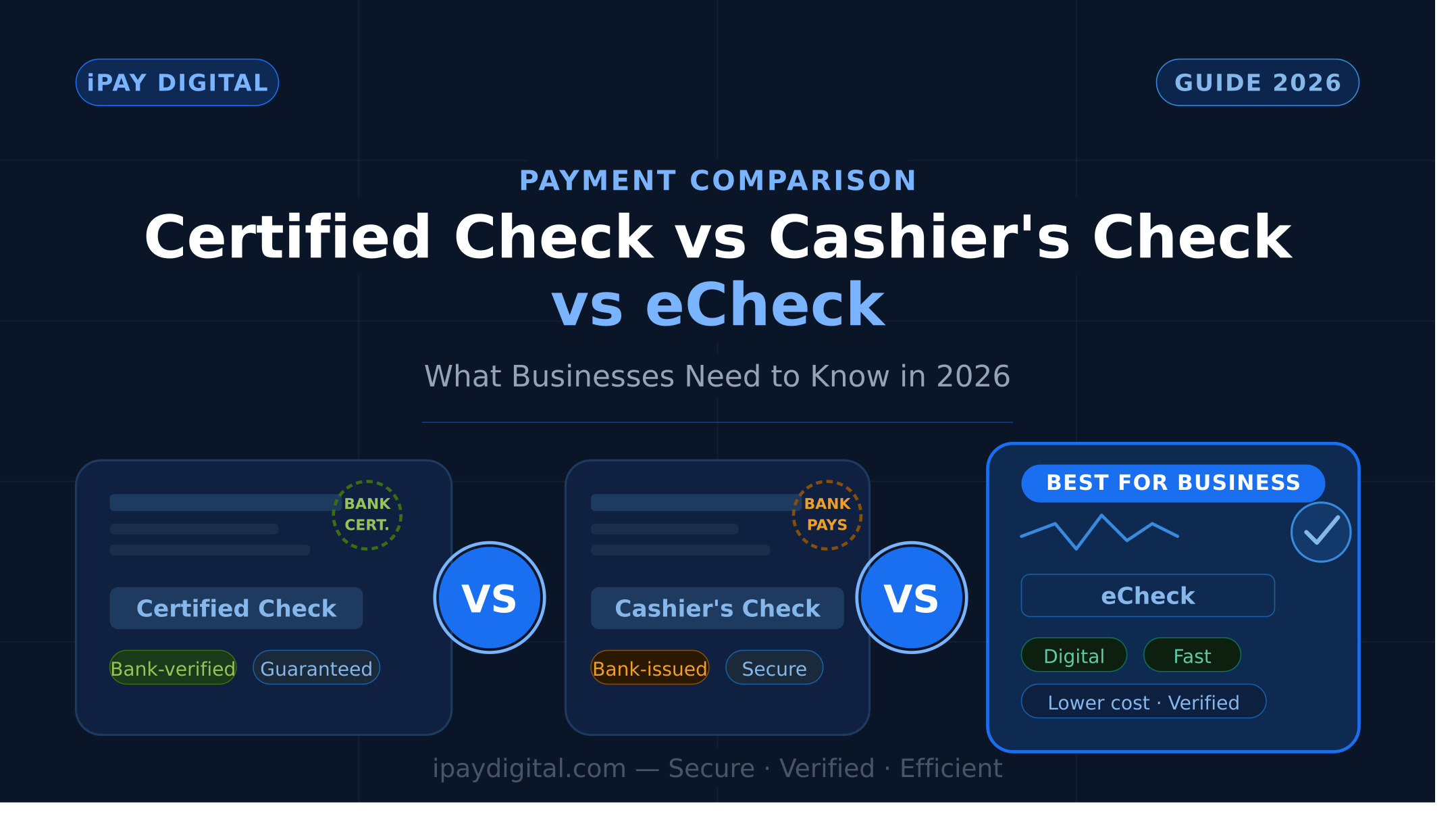
Certified Checks: Still Relevant, But Highly Situational
Certified checks haven’t disappeared—they’ve just become more niche.
In 2026, they’re primarily used in situations where proof of funds matters more than speed. Think:
- High-value asset transfers
- Legal or compliance-driven transactions
- One-time deals where trust needs to be verified upfront
The strength of certified checks is still reliability. The bank confirms that funds exist and reserves them for the transaction.
But here’s the trade-off in today’s environment:
- Manual processing slows things down
- Physical handling adds friction
- There’s little integration with modern systems
So while certified checks offer security, they don’t align well with businesses that prioritize speed and automation.
Cashier’s Checks: High Trust, Limited Flexibility
Cashier’s checks still play a role in 2026, especially in transactions where guaranteed payment is non-negotiable.
Because the bank issues the check using its own funds, it removes risk for the recipient. That’s why they’re still used for:
- Large vendor payments
- Property or high-ticket transactions
- Situations requiring maximum payment assurance
But again, the limitation is clear:
- They’re not built for high-volume usage
- They don’t integrate with digital workflows
- They introduce delays in otherwise fast-moving operations
In a world where businesses are optimizing every process, cashier’s checks feel more like a backup option than a primary strategy.
eCheck Payment in 2026: Built for Scale, Not Just Convenience
Now let’s talk about where things are actually moving.
eCheck payment isn’t just a digital version of a check anymore—it’s a strategic tool in modern payment processing.
With advanced eCheck payment processing services, businesses are now able to:
- Automate high-value and recurring payments
- Reduce reliance on high-fee card transactions
- Improve visibility into payment timelines
- Eliminate manual reconciliation
And the biggest difference in 2026?
These systems are no longer standalone—they’re integrated.
Modern eCheck payment solutions connect directly with:
- Billing platforms
- Accounting systems
- CRM tools
- Subscription management software
That means payments don’t just happen—they’re tracked, managed, and optimized in real time.
Where the Real Difference Shows Up
Let’s move beyond definitions and look at what actually impacts your business today:
Speed vs Control
- Certified Check: High control, low speed
- Cashier’s Check: High trust, moderate speed
- eCheck Payment: Balanced speed with operational control
Scalability
- Certified Check: Not scalable
- Cashier’s Check: Limited scalability
- eCheck Payment Solutions: Built for recurring and high-volume transactions
Operational Efficiency
- Certified Check: Manual effort required
- Cashier’s Check: Bank-dependent process
- eCheck Payment Processing Services: Automated workflows, minimal effort
Cost Impact
- Certified Check: Bank fees + handling overhead
- Cashier’s Check: Higher issuance costs
- eCheck Payment: Lower cost, especially for large or repeated transactions
Why Businesses Are Prioritizing eCheck Payment Solutions in 2026
The shift isn’t happening because eChecks are “better” in every situation. It’s happening because they solve the problems businesses actually face today.
1. Rising Pressure on Margins
With increasing competition, businesses are looking for ways to reduce operational costs. High card processing fees are under scrutiny, and eCheck payment offers a more cost-efficient alternative for certain transactions.
2. Growth of Subscription & Retainer Models
Recurring revenue is now a standard model across industries. Businesses need reliable, low-failure payment methods—and that’s where eCheck payment processing services deliver real value.
3. Demand for Automation
Manual processes don’t scale. Businesses want systems that run in the background without constant intervention.
4. Need for Predictable Cash Flow
Uncertainty in payments leads to uncertainty in planning. Modern eCheck payment solutions provide better visibility and consistency, making financial planning easier.
The Smart Approach: Use All Three—But Strategically
The goal isn’t to replace certified or cashier’s checks entirely. It’s to use each method where it fits best.
Here’s how modern businesses are approaching it:
- Certified Checks: For rare, high-trust, compliance-heavy transactions
- Cashier’s Checks: For guaranteed payments in high-value deals
- eCheck Payment Solutions: For day-to-day operations, recurring billing, and scalable growth
This layered strategy allows businesses to balance security, efficiency, and cost.
What the Future Looks Like Beyond 2026
Looking ahead, the trend is clear:
- Less reliance on physical payment methods
- More integration between payment systems and business tools
- Greater emphasis on automation and cost efficiency
As this continues, eCheck payment processing services will become even more central—not because they’re new, but because they align with how businesses now operate.
It’s No Longer About the Method—It’s About the System
In 2026, the conversation has moved beyond “Which payment method is better?”
The real question is:
“Does your payment system support how your business is growing?”
Certified checks and cashier’s checks still have their place—but they serve specific, limited roles.
On the other hand, eCheck payment, powered by modern eCheck payment processing services and scalable eCheck payment solutions, fits into the bigger picture of how businesses manage payments today.
Frequently Asked Questions
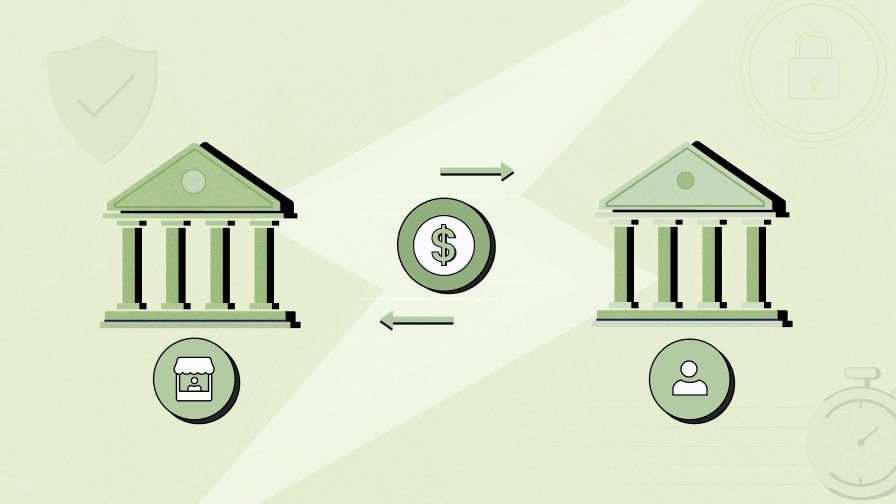
Certified checks and cashier’s checks are physical payment methods used for high-value transactions, while eCheck payment is a digital, bank-to-bank method. In 2026, businesses prefer eCheck payment solutions for faster processing, lower costs, and better integration with modern payment systems.
Businesses are adopting eCheck payment solutions because they reduce transaction costs, support automation, and improve cash flow visibility. Unlike traditional checks, eCheck payment processing services allow seamless integration with billing and accounting systems.
Yes, but they are mostly used in specific situations such as high-value or legally sensitive transactions where guaranteed funds are required. However, they are less common for everyday business payments compared to digital methods.
eCheck payment processing services streamline payment collection by automating transactions, reducing manual work, and minimizing errors. They also provide better tracking and reporting, helping businesses manage finances more efficiently.
Yes, modern eCheck payment solutions use encryption, authentication, and compliance standards to ensure secure transactions. They are considered a reliable option for both one-time and recurring payments.
A cashier’s check is typically used when guaranteed funds are required for large, one-time transactions. However, for recurring payments or operational efficiency, businesses prefer eCheck payment due to its automation and lower cost.
Yes, one of the biggest advantages of eCheck payment solutions is their ability to automate recurring payments. This makes them ideal for subscription-based businesses, service contracts, and regular invoicing.
In most cases, yes. eCheck payment processing services usually have lower fees compared to credit or debit card transactions, especially for high-value payments, making them a cost-effective choice for businesses.